





Petal Power: How to Infuse Tea and Water with Edible Flowers
There's a reason floral beverages have been showing up everywhere, from farmers' markets to fine-dining menus. A handful of dried hibiscus blossoms dropped into a pitcher of cold water turns something ordinary into something you actually want to photograph. And beyond the visual appeal, edible flowers bring genuine flavor depth, ranging from tart and cranberry-like to honey-sweet to faintly peppery, that no artificial flavoring can replicate.
The good news: you don't need a garden or a culinary degree. You need flowers, water, and a little patience. Here's everything worth knowing.
Which Flowers Are Actually Worth Using?
Not every pretty flower belongs in your drink, and that matters. Only flowers confirmed as food-safe should go anywhere near your glass. The reliable headliners are:
Hibiscus is the workhorse of floral beverages. Its dried calyces (the part used for drinking, not the petals themselves) produce a deep ruby-crimson liquid with a tartness that lands somewhere between cranberry and pomegranate. It's bold, it's beautiful, and it plays well with citrus, ginger, and mint.
Lavender is the one people get wrong most often. Used generously, it turns your drink into something that smells like a soap aisle. Used with restraint, it contributes a subtle floral sweetness with a faint herbal edge that pairs beautifully with lemon or honey. Less is genuinely more here.
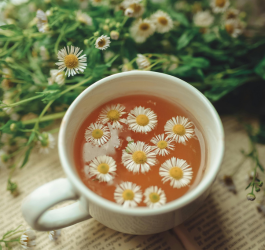
Chamomile brings a mild, apple-adjacent sweetness with a gentle earthiness. It's the go-to for a calming evening infusion, and it layers well with other delicate flavors without competing for attention.
Rose petals are more aromatic than strongly flavored, contributing a perfumed quality that lifts both hot and cold drinks. They work especially well paired with green or white tea, where their delicacy doesn't get steamrolled.
Elderflower has a light, honeyed, almost grape-like quality that's become popular in everything from sparkling water to cocktails. It's subtle enough for plain water infusions and sophisticated enough for a dinner party centerpiece.
Violets and borage flowers are milder still, adding color and a faint floral note. They're often more decorative than flavor-forward, but they do belong in the "safe and edible" category.
One rule that overrides everything else: source your flowers from food-grade suppliers or grow them yourself without pesticides. Florist flowers are treated with chemicals not meant for consumption. This isn't a technicality worth ignoring.
Cold Infusions vs. Hot Steeping: Two Completely Different Results
The method you choose not only changes the process but also the flavor profile you end up with.
Hot steeping is faster and tends to extract more intense flavor and color. For hibiscus, steep dried flowers in just-boiled water for 5 to 10 minutes, then strain. For lavender, keep it to 3 to 4 minutes max before it veers into overpowering territory. For chamomile, 5 minutes at around 200°F yields a full, slightly sweet floral profile without bitterness.
Cold infusion (also called cold brewing) is slower but rewarding. Add your flowers to cold or room-temperature water and let them sit in the refrigerator for 4 to 12 hours. The result is gentler, often sweeter-tasting, and noticeably less astringent. Hibiscus cold-brewed overnight produces a drink that's still vibrantly colored and tart but rounder and more drinkable straight. Rose petals and elderflower particularly shine with cold infusion, since the slow extraction preserves their more volatile aromatics.
A practical ratio to start with: about 2 tablespoons of dried flowers per 16 ounces of water, adjusted to taste from there. Fresh flowers require roughly twice the volume since they contain much more water.
Pairing Flowers with the Right Tea Base
If you're adding floral infusions to tea rather than plain water, the base tea matters as much as the flower.
· White tea is the most neutral canvas. Its light, slightly sweet profile doesn't compete, making it ideal for delicate flowers like rose, jasmine, or violet. Think of it as the blank wall that lets the art do its job.
· Green tea adds a grassy, slightly vegetal undertone that works surprisingly well with hibiscus (the contrast is interesting) or pairs cleanly with jasmine and chamomile. Avoid over-steeping your green tea base before adding the floral element, since bitterness will fight everything you're trying to build.
· Black tea is assertive, so your flower needs to match that energy. Hibiscus holds its own. Lavender does too, in small quantities. Rose can work if the black tea is brewed on the lighter side. Earl Grey, already bergamot-forward, pairs well with lavender for an almost baroque floral stack.
· Herbal tea bases (rooibos, peppermint, lemongrass) open up another set of combinations entirely. Rooibos with hibiscus and a squeeze of orange is a legitimate crowd-pleaser that requires almost no skill to pull off.
Flavor Upgrades That Actually Work
A few additions can take a floral infusion from pleasant to memorable:
A strip of citrus peel, whether orange, lemon, or grapefruit, added during steeping brightens the entire drink and amplifies floral notes. A small piece of fresh ginger adds warmth that balances hibiscus's acidity particularly well. A sprig of fresh mint adds a cooling effect, making cold flower infusions significantly more refreshing in warmer months.
For sweetening, honey complements most floral infusions more naturally than granulated sugar, which can taste flat in comparison. Agave is a neutral option if you want sweetness without influence on the flavor direction.
Making It a Sparkling Drink
Any cold flower infusion can be turned into a sparkling beverage with minimal effort. Brew your infusion at double strength (twice the flowers, same amount of water), chill it, then mix one part infusion to one part sparkling water just before serving. This preserves the carbonation and gives you full control over sweetness and intensity. A hibiscus-ginger infusion mixed with plain sparkling water over ice is a genuinely excellent non-alcoholic option for any occasion.
Skip the Work, Start with What's Already Good
If the DIY route sounds like too much setup right now, Beverage Universe carries a wide selection of ready-made teas with floral profiles already built in, including hibiscus teas and floral-flavored iced teas that deliver the same experience without the steeping time. Our full tea selection and flavored water options are worth browsing if you want to taste what's possible before committing to your own blending experiments.
That said, once you've made a cold-brewed hibiscus and ginger infusion from scratch and watched the water turn that particular shade of deep garnet, you'll probably find the DIY version hard to give up. The difference between a floral beverage and an extraordinary one almost always comes down to fresh ingredients and a little intention. That's a low bar worth clearing.