














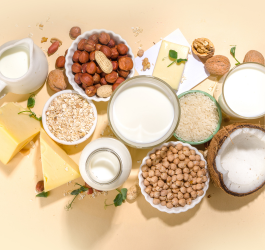
From almond milk to oat milk, there are many non-dairy alternatives to traditional cow’s milk that are taking the world by storm. A staple in many households and coffee shops, non-dairy alternatives are favored for a variety of reasons, from lactose intolerance to preference for plant-based alternatives to vegan lifestyles.
Today we’ll take a look at all the most popular options available while comparing nutritional value and taste.
Almond Milk
Light and refreshing, almond milk has a light texture and subtle nutty flavor. Low in calories, almond milk is beloved by those who want to reduce their caloric intake. It’s a good source of vitamin E, which acts as an antioxidant, and it’s also fortified with calcium and vitamin D. However, it’s low in protein, so go elsewhere if you want a high-protein milk alternative.
Taste-wise, almond milk has a slightly sweet, mild flavor, making it good for smoothies, cereals, and coffee. However, not everyone enjoys the thin consistency.
Oat Milk
Creamy and sweet, oat milk is comprised of oats and water, with consistency similar to cow’s milk. So, if you want a milk substitute that can be added to coffee or cereal without separating, oat milk is a good choice. Nutritionally, it’s more robust than almond milk, containing more carbohydrates for sweetness. It’s also fortified with calcium, vitamin D, and B vitamins.
From a health perspective, oat milk is higher in fiber compared with other non-dairy milks, which is good if you’re going for digestion and satiety. However, the higher carbohydrate content means it’s not the best choice for those on low-carb or ketogenic diets. Its rich texture and smooth taste go well in coffee drinks like lattes and cappuccinos.
Soy Milk
High in protein, soy milk is one of the few non-dairy milks that provides a protein content comparable to cow’s milk - at about seven grams per cup. Try this if you want to boost your protein intake. Soy milk is rich in essential fatty acids, B vitamins, and minerals such as calcium and magnesium when fortified.
Some people find it has a “bean-like” flavor but if you get a flavored or sweetened variety, this can be offset. Soy milk pairs well in both savory and sweet dishes, making it versatile for baking, cooking, and beverages.
Coconut Milk
Rich yet low in protein, coconut milk features a tropical flavor, making it a good choice for cooking and baking when it comes to creating Southeast Asian dishes. If you plan to drink it, be aware that coconut milk is typically thinner and less creamy than canned versions, yet it still has a rich, smooth texture. It’s low in protein and carbohydrates but has a higher amount of saturated fat compared with other non-dairy milks.
Rich in medium-chain triglycerides (MCTs), coconut milk offers some health benefits, such as boosting metabolism.
Wrapping it Up
Of course, the “best” non-dairy milk will depend on your individual preferences and dietary needs. Want something light and low-calorie? Try almond milk. Looking for a creamy, naturally sweet option? Oat milk may be right up your alley. Maybe you want something that’s high in protein. Soy milk would fit the bill. Or, if a rich, tropical flavor is what you’re after, reach for the coconut milk.
Contact Beverage Universe to Explore Non-Dairy Options
Whether you prioritize taste, texture, or nutritional content, there is definitely a non-dairy milk out there for you! Get started at Beverage Universe to browse our non-dairy milk alternatives. Call us with any questions.